English
 中文简体
中文简体 عربى
عربى


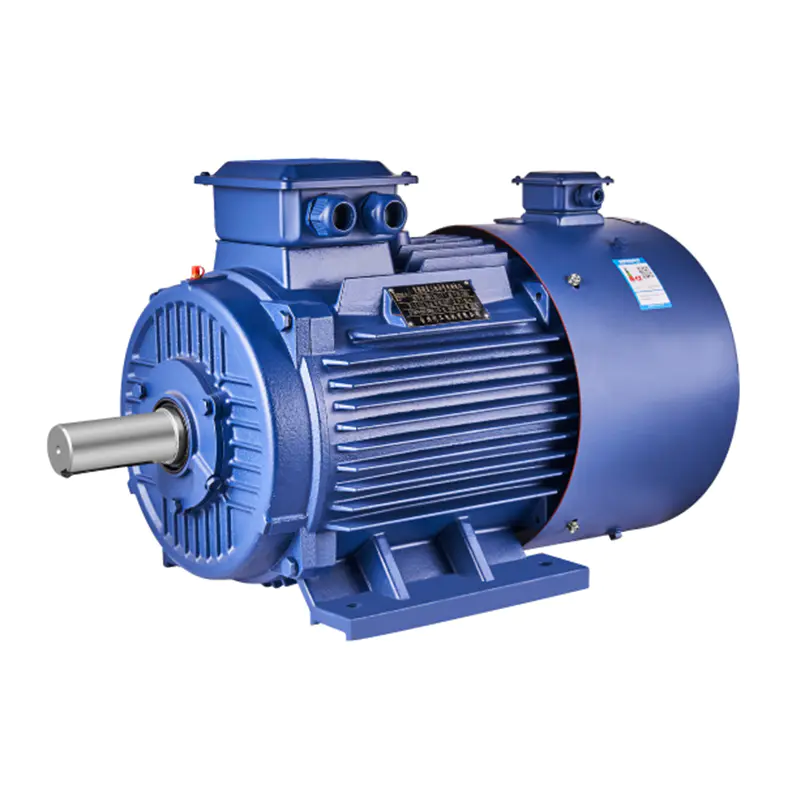
A skip hoist in a concrete block plant suddenly stops working. The maintenance team arrives to find the circuit breaker tripped and a distinct smell of burnt insulation coming from the motor's brake assembly . Upon disassembly, they discover the brake coil is blackened and open. This scenario—a burnt coil on a Three Phase Brake Motor—is a frustratingly common failure that brings production lines to a halt. While a Single Phase Brake Motor relies on a rectifier to convert AC to DC for its brake, the three-phase version may have a coil designed to run directly on two of the incoming phases or through its own rectifier. Understanding why these coils fail is the primary step toward prevention.
Contrary to popular belief, the coil doesn't simply "wear out" from age. Burnout is almost always a symptom of another underlying issue within the system. Field reports and technical troubleshooting guides point to several consistent culprits.
Reason 1: Incorrect Air Gap Adjustment
The more frequently cited cause of premature coil failure is an improperly set air gap between the electromagnet (containing the coil) and the armature plate . This gap is critical for the brake's mechanical and electrical health.
Gap Too Wide: When the air gap exceeds the manufacturer's specification, the magnetic circuit becomes less efficient. To create enough force to pull the armature plate in and release the brake, the coil draws significantly more current than its design rating. This sustained overcurrent generates excessive heat, which degrades the coil's insulation until it eventually shorts and burns out .
Gap Too Narrow: If the gap is too tight, the armature plate may drag against the friction disc even when the brake is supposed to be released. This causes rapid wear of the disc and can prevent the motor from reaching full speed, but the primary threat to the coil is less direct. However, a dragging brake increases the load on the motor, which can cause overheating in the main windings .
Regular inspection and adjustment of the air gap, as outlined in the motor manufacturer's manual, is essential. As a rule of thumb, the gap should be checked periodically, as nuts can loosen over time due to vibration .
Reason 2: Rectifier Failure in DC Brake Systems
Many brake motors, including both Single Phase Brake Motor and Three Phase Brake Motor designs, use a rectifier to convert the AC supply into DC for the brake coil. DC coils are often preferred for their quieter operation and more compact design. The rectifier is a critical component, and its failure can directly destroy the coil.
Short Circuit Failure: If a diode in the rectifier shorts, it can allow AC current to flow through the coil. AC in a DC coil causes the magnetic field to pulsate instead of remaining steady. This leads to loud buzzing, excessive vibration, and rapid overheating of the coil, often burning it out in a short time .
Open Circuit Failure: While this stops the brake from releasing, it usually doesn't burn out the coil itself. The motor simply won't start against a locked brake.
Diagnosing a rectifier problem involves measuring the DC voltage at the coil terminals. If you measure AC voltage instead of smooth DC, the rectifier is faulty and must be replaced immediately to protect the new coil .
Reason 3: Single-Phasing on a Three-Phase Brake Coil
This is a failure mode unique to three-phase systems. If the brake coil is a three-phase type connected directly to the line, it is vulnerable to "single-phasing." This occurs when one phase of the power supply is lost due to a blown fuse, a loose connection, or a failed contactor .
When a three-phase coil loses one phase, the current in the remaining two phases increases dramatically as the motor attempts to deliver the same torque . This imbalance can go unnoticed by standard overload protection if it's not specifically designed for the brake circuit. The result is severe overheating of the coil windings on the energized phases, causing insulation breakdown and burnout . The real-world example of the skip hoist where "two the phases were drawing same current but third phase was drawing higher current" is a classic symptom of this issue .
Reason 4: Poor Rewinding Quality
When a coil burns out, the immediate reaction is often to have it rewound by a local shop. While this can be a cost-effective solution, it carries significant risk .
Loss of Specifications: The original coil is wound to exact specifications regarding wire gauge, number of turns, and winding pattern (e.g., star or delta for three-phase coils) . A local winder may not have access to this "formula."
Material Quality: The quality of the new magnet wire and insulation varnish directly impacts the coil's ability to dissipate heat and resist voltage stress. Inferior materials can cause premature failure .
Inconsistent Magnetic Field: As documented in the concrete plant case, a poorly executed rewind can result in a coil that does not generate a uniform magnetic field. This causes the armature plate to pull unevenly, causing partial contact, vibration, and eventual burnout—sometimes within a single shift .
Before opting for a rewind, consider the motor's criticality. For essential equipment, replacing the entire motor or brake assembly from a reputable manufacturer like Zhejiang Ligong Motor Co., Ltd. ensures that all components meet original specifications and are tested for reliability .
Reason 5: Overload and Excessive Duty Cycle
Every brake motor is designed for a certain duty cycle—a number of starts and stops per hour. Applications that exceed this rating can cause the coil to overheat.
Frequent Starts: Each time the brake engages or disengages, the coil experiences an inrush of current. On a system cycling 36 times per minute, the coil and rectifier are under constant electrical and thermal stress .
Slow Speed Operation: When a Three Phase Brake Motor is run at very low speeds using a Variable Frequency Drive (VFD), the brake, if connected to the motor's output terminals, may not receive enough voltage to fully release. This can cause the brake to slip or drag, generating heat and causing premature coil wear .
Diagnosis and Prevention Checklist
To avoid the downtime and cost associated with a burnt brake coil, implement these checks as part of your regular maintenance routine:
Monthly Air Gap Inspection: Measure and adjust the air gap according to the motor's manual. Keep a log of gap measurements to track wear trends .
Current Measurement: Use a clamp meter to measure the current draw of each phase of the Three Phase Brake Motor coil. Significant imbalance is a red flag .
Rectifier Output Test: Periodically check the DC voltage output of the rectifier to ensure it's smooth and within specifications.
Resistance Checks: When a coil is cold, measure its resistance and compare it to the nameplate value or manufacturer's data. A lower reading suggests shorted turns . Check insulation resistance to ground as well.
Thermal Protection: Ensure that any built-in thermal protectors are functioning and that the motor's cooling (e.g., external fan) is unobstructed .
By understanding that a burnt coil is a symptom, not the root cause, maintenance teams can shift from reactive replacements to proactive system management. Whether you are troubleshooting a Single Phase Brake Motor with a suspect rectifier or investigating an imbalance in a Three Phase Brake Motor, a systematic approach will reveal the true culprit and prevent a recurring cycle of failure.